
6 June 1944 - 25 July 1944
At the outset the scale of graves units in the beach-head was as follows :-
• With First Canadian Army
- two Graves Registration Units (GRU)
- one Graves Concentration Unit (GCU)
• With Second Army
- five Graves Registration units.
The first BRITISH GRUs landed on D+3 and by 20 July 44 the number of graves registered was 8,000 out of a total of 12,500 burials reported by formations.
It is considered that these figures would have been improved if GRUs had been allotted territorially instead of, as in Second Army, one GRU per corps and one for Second Army Troops, since it was found that formations and units would often report burials to their original GRU after changing from one corps to another, even though the original GRU was not in a position to register their graves in the new area.
The only other difficulty experienced at this stage was due to the failure of the manufacturers to complete on time their contract for delivery of ten thousand prefabricated metal crosses. As a result graves units had to improvise with small wooden crosses, assisted whenever possible by crosses made from RE sources.
26 July-26 September
The frequent moves of corps throughout this phase made the work of the GRUs attached to them very difficult.
Before graves could be located and registered as a result of the receipt of burial returns, the GRUs would have to move on again, sometimes for a distance of 120 miles.
Consequently the number of non-registered graves, particularly in the area NORTH of the SEINE up to the BELGIAN frontier, began to accumulate.
It was not until after the entry into BRUSSELS and ANTWERP that it became possible to deal with graves location and registration methodically.
27 September 1944—14 January 1945
The comparatively static conditions which characterised this phase of the campaign enabled the Graves Service to catch up with the locating and registration of the accumulation of graves which had been reported in previous months.
By the end of the year from a total of 36,538 burial reports which had been received, 32,218 graves had been registered.
In addition, work had been commenced on permanent BRITISH and CANADIAN cemeteries in NORMANDY, while twenty-six BRITISH cemeteries, two CANADIAN cemeteries and twelve military graveyards in civilian cemeteries were being developed in NORMANDY and BELGIUM.
Two GRUs were formed to work in L of C areas, in addition to one BRITISH GCU and one CANADIAN GCU for work in the BAYEUX area.
By the end of the year 1,321 graves had been concentrated in permanent cemeteries.
The locating of graves of BEF personnel killed during 1939-1940 was also started and by 29 December a total of 2,840 graves of this type had been located and reported. This work was extremely difficult at first as no official records were available, but was later made easier through the co-operation of local municipal authorities in providing lists of burials.
15 January 1945 - 8 May 1945
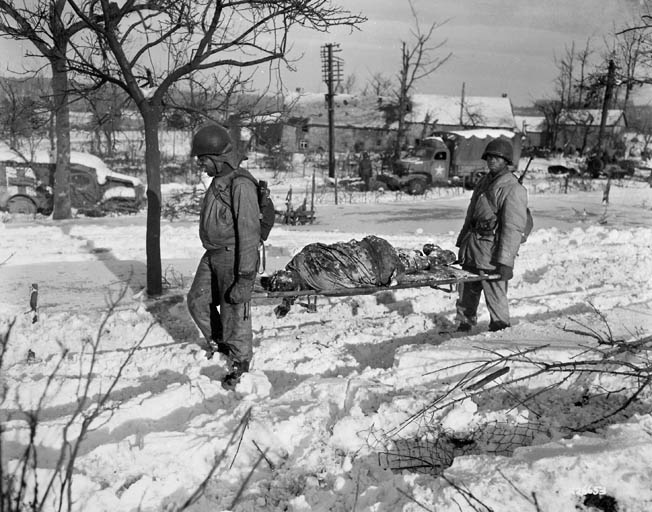
During the months of January to May there were four BRITISH and one CANADIAN Graves Registrating Units working in the L of C areas while four BRITISH and two CANADIAN units followed the advances of their respective armies.
Al together they registered 16,000 graves, bringing the total of graves registered during the campaign to 48,506.
In addition, two BRITISH and one CANADIAN Graves Concentration Units operating in NORMANDY and later in northern BELGIUM and HOLLAND concentrated 4,000 graves.
At the end of hostilities there were seventy-nine permanent cemetery sites in existence and twenty-eight plots in communal cemeteries were also being used by arrangement with the local authorities.
In January a GRU was specially sent from UK to register the graves of soldiers killed in 1939—1940 and by the beginning of May had succeeded in dealing vith 6,433 of these.
Abbreviations